How to Maintain Vinyl Floors in Commercial Offices
Vinyl flooring is a practical choice for many commercial offices because it is durable, easy to maintain, and available in a variety of styles. However, regular foot traffic can bring in dirt, dust, moisture, and debris that gradually affect the floor’s appearance.
A consistent commercial floor cleaning routine can help keep vinyl floors clean, presentable, and suitable for everyday office use. Proper maintenance also helps businesses address spills and buildup before they become more difficult to manage.
What Is Vinyl Flooring?
Vinyl flooring is a resilient flooring material commonly used in offices, corridors, reception areas, healthcare-related spaces, retail environments, and other commercial facilities.
Different vinyl products have different care requirements. Before using a cleaning chemical, machine, or maintenance treatment, businesses should follow the flooring manufacturer’s recommendations.
1. Remove Dirt and Debris Regularly
Loose dirt and debris can accumulate quickly in high-traffic office areas. When walked across the floor repeatedly, abrasive particles may contribute to surface wear.
Regular sweeping, dust mopping, or vacuuming can help remove loose debris before it becomes a larger cleaning problem.
High-traffic areas may require more frequent attention than low-use spaces.
2. Clean Spills Promptly
Spills should be addressed as soon as practical.
Water, coffee, food, and other liquids can create slippery conditions and leave visible marks if allowed to remain on the floor.
A simple maintenance routine should include checking common spill-prone areas such as:
- Break rooms
- Reception areas
- Near entrances
- Hallways
- Employee work areas
- Around beverage stations
Use cleaning products appropriate for the specific vinyl flooring.
3. Use the Right Cleaning Products
Not every cleaning chemical is suitable for vinyl floors.
Using overly aggressive chemicals or products that are not approved for the flooring can potentially damage the surface or affect its appearance.
Businesses should check the manufacturer’s care instructions before selecting cleaning products.
A professional office cleaning company should also understand the requirements of the flooring being maintained.
4. Use Proper Mopping Techniques
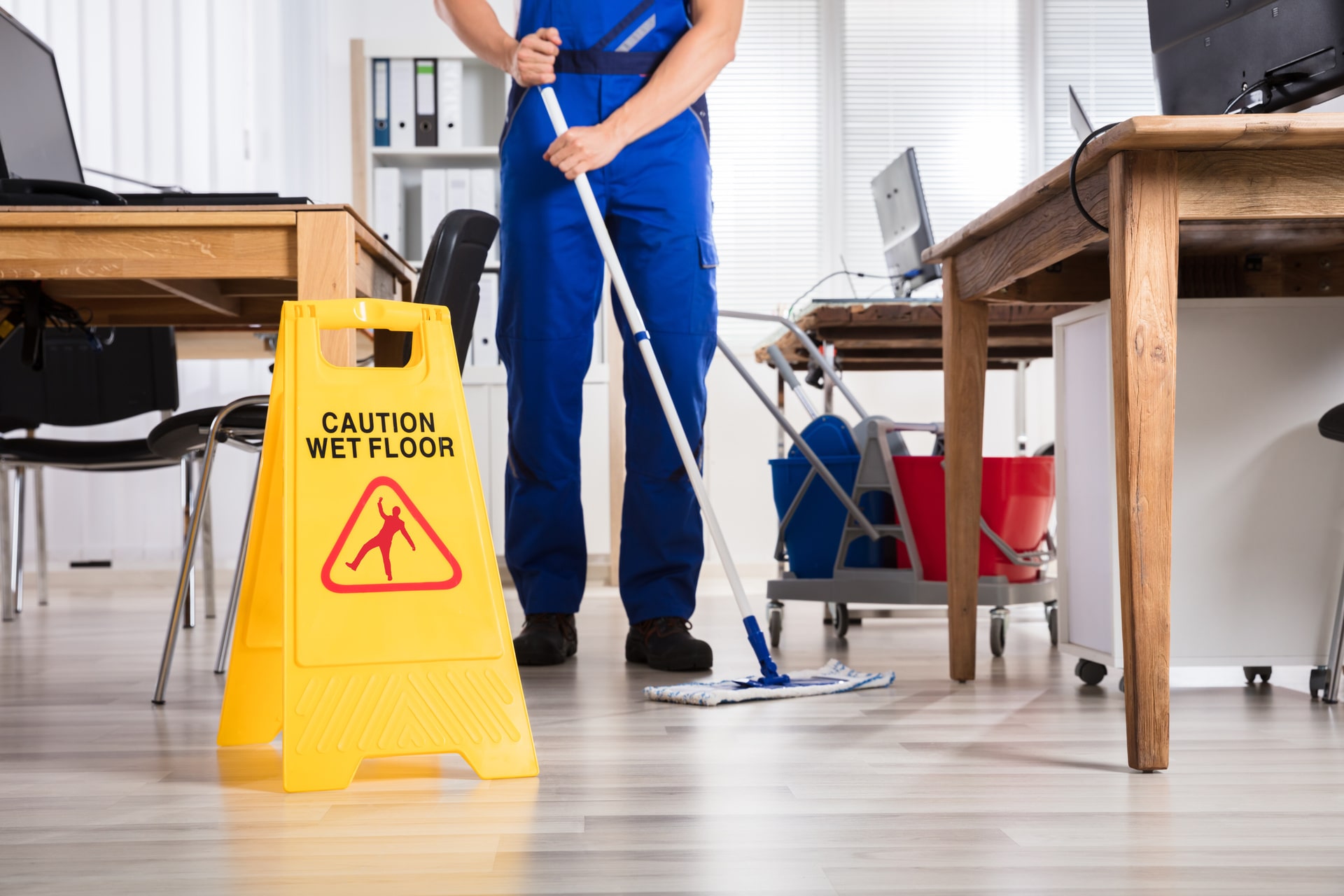
Routine damp mopping can help remove soil that sweeping or vacuuming does not capture.
However, excessive water should generally be avoided. Water can enter seams or areas where flooring is damaged and may contribute to maintenance problems.
Use the appropriate mop, cleaning solution, and dilution recommended for the floor.
5. Protect Floors From Outdoor Dirt
A large amount of office floor dirt enters through exterior doors.
Entrance mats can help capture some dirt and moisture before it reaches vinyl flooring.
Businesses should regularly inspect and clean mats because heavily soiled mats become less effective at trapping debris.
Entrance areas may require additional cleaning during rainy or dusty weather.
6. Focus on High-Traffic Areas
Reception areas, hallways, entrances, elevators, and shared spaces often experience more foot traffic than individual offices.
These areas may need more frequent sweeping, vacuuming, mopping, and spot cleaning.
A customized commercial cleaning service can establish different cleaning frequencies based on how each area is used.
7. Avoid Scratches and Surface Damage
Furniture movement can potentially damage vinyl flooring.
Using appropriate furniture pads and avoiding unnecessary dragging can help protect the surface.
When moving desks, chairs, cabinets, or other heavy items, use suitable moving procedures rather than pulling them directly across the floor.
8. Maintain Office Furniture and Chair Areas
Office chairs can create repeated wear in specific locations.
Where appropriate, businesses can use compatible chair mats or other protective solutions recommended for the flooring.
Regularly cleaning around desks and furniture also helps prevent dust and debris from accumulating in difficult-to-reach areas.
9. Schedule Periodic Detailed Floor Cleaning
Routine cleaning handles everyday dirt, but commercial vinyl floors may also benefit from periodic detailed maintenance.
Depending on the flooring type and manufacturer’s recommendations, professional floor care may include more intensive cleaning or other approved maintenance procedures.
The correct approach depends on the specific vinyl product and its condition.
10. Avoid Unapproved Coatings or Treatments
Businesses should not automatically apply waxes, finishes, coatings, or other treatments to vinyl flooring.
Some vinyl flooring products are designed with factory-applied protective layers and may not require additional treatments.
Always check the manufacturer’s maintenance instructions before applying any product.
11. Clean Around Office Entrances
Office entrances are often the first point where outdoor dirt reaches the flooring.
Regular entrance maintenance can include:
- Sweeping
- Vacuuming
- Damp mopping
- Spot cleaning
- Mat maintenance
- Prompt spill removal
Maintaining these areas can help reduce the amount of soil transferred throughout the office.
12. Establish a Consistent Cleaning Schedule
A cleaning schedule helps prevent maintenance tasks from being overlooked.
For example:
Daily: Remove debris, address spills, and clean high-traffic areas.
Several times per week: Perform routine sweeping, vacuuming, and damp mopping according to traffic.
Periodically: Perform more detailed floor maintenance based on flooring requirements.
The exact frequency should be adjusted according to office traffic, floor condition, and manufacturer guidance.
13. Train Cleaning Personnel
Proper cleaning techniques are important for protecting commercial vinyl floors.
Cleaning personnel should understand:
- Which products are approved
- Proper dilution ratios
- Appropriate equipment
- Mopping procedures
- Spill response
- Safety requirements
- Manufacturer recommendations
A professional janitorial services company can incorporate flooring requirements into its cleaning procedures.
14. Inspect Floors Regularly
Routine inspections can help identify problems before they become larger maintenance concerns.
Look for:
- Persistent stains
- Scratches
- Loose or damaged areas
- Excessive wear
- Water-related issues
- Dirt buildup
- Changes in surface appearance
Cleaning personnel can report visible flooring problems to facility management so they can be evaluated appropriately.
15. Combine Floor Care With Office Cleaning
Vinyl floor maintenance works best when it is part of a broader office cleaning plan.
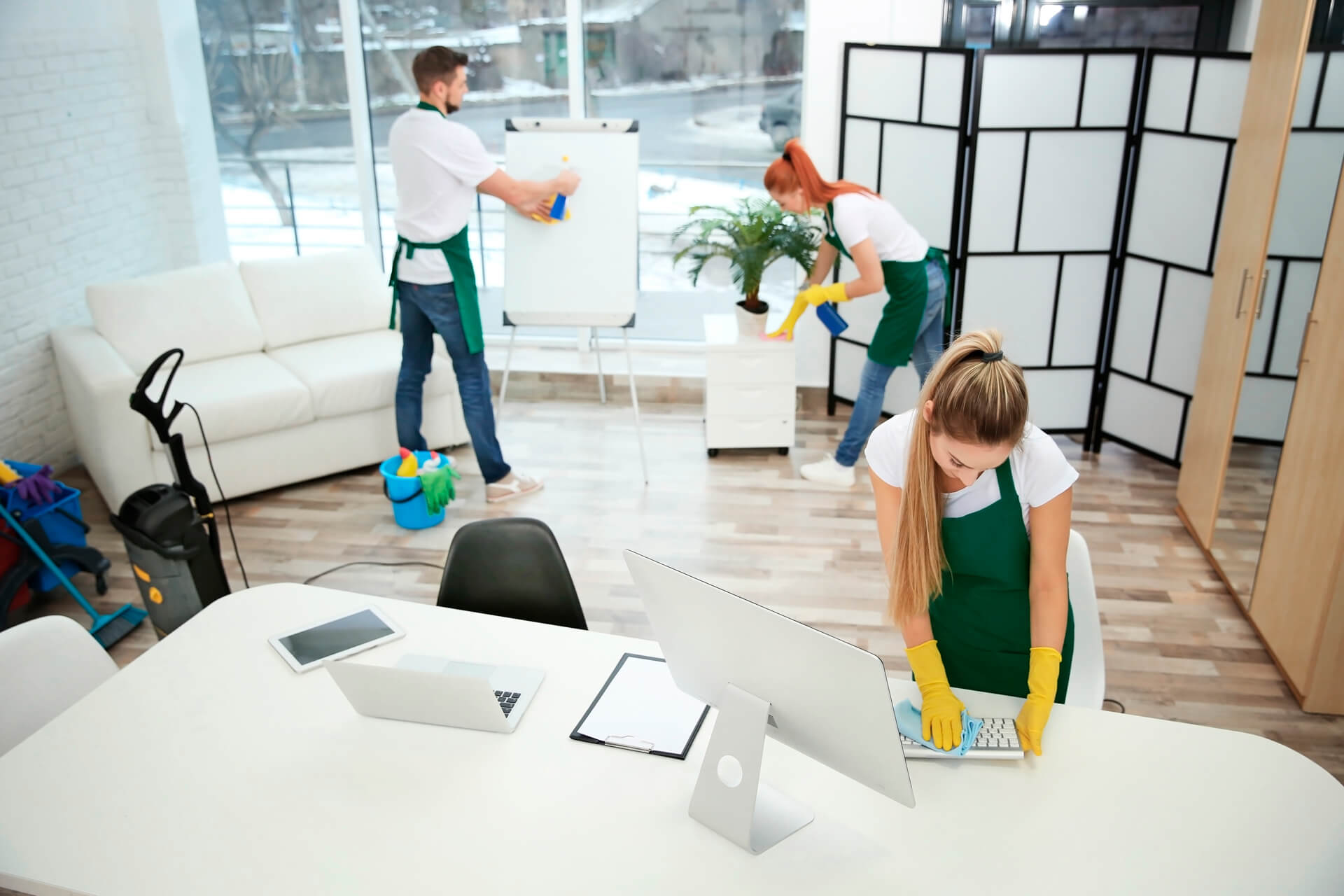
A professional cleaning program can combine floor cleaning with:
- Workspace cleaning
- Restroom maintenance
- Reception cleaning
- Dusting
- Waste removal
- Break room cleaning
- High-touch surface cleaning
- Common-area maintenance
This creates a more comprehensive approach to commercial facility cleanliness.
Frequently Asked Questions
How often should vinyl floors in offices be cleaned?
Cleaning frequency depends on foot traffic, office size, weather, entrances, and floor conditions. High-traffic areas may need daily attention, while lower-traffic areas may require less frequent cleaning.
Can you use a regular mop on commercial vinyl flooring?
A suitable damp mop can generally be used when compatible with the flooring manufacturer’s instructions. Avoid excessive water and use an approved cleaning solution.
How do you remove dirt from vinyl office floors?
Start by removing loose debris through sweeping, dust mopping, or vacuuming. Then use an appropriate cleaning solution and damp-mopping method recommended for the flooring.
Should wax be used on vinyl flooring?
Not necessarily. Some modern vinyl products do not require wax or additional finishes. Always follow the manufacturer’s maintenance instructions before applying any treatment.
Can professional cleaners maintain commercial vinyl floors?
Yes. Professional commercial janitorial services can include routine vinyl floor cleaning and periodic maintenance when specified in the service agreement.
Choosing Professional Commercial Floor Cleaning
When hiring a cleaning company for commercial vinyl floors, ask about its experience with resilient flooring and whether its cleaning procedures follow manufacturer recommendations.
A reliable provider should be able to explain the cleaning frequency, products, equipment, and floor-care tasks included in the service plan.
Conclusion
Maintaining vinyl floors in commercial offices requires consistent cleaning, prompt spill removal, proper products, and appropriate maintenance techniques. Regular sweeping, vacuuming, damp mopping, entrance-mat care, and high-traffic-area cleaning can help keep office vinyl flooring clean and presentable.
For long-term maintenance, businesses should always follow the flooring manufacturer’s recommendations and work with trained cleaning professionals when specialized floor care is required. A customized commercial cleaning plan can help protect the appearance and usability of vinyl floors while supporting a cleaner, more professional office environment.