How Janitorial Services Handle Routine Commercial Spills
Spills are a common part of daily operations in commercial facilities. Coffee in an office break room, water near an entrance, food spills in shared kitchens, and liquid messes in hallways can happen at any time. Although these incidents may seem minor, leaving them unattended can create slippery surfaces, unpleasant odors, stains, and additional cleaning problems.
Professional janitorial services help businesses manage routine commercial spills through organized cleaning procedures, appropriate products, and proper equipment. Prompt attention helps maintain cleaner floors, reduce potential slip hazards, and keep workplaces presentable for employees, customers, and visitors.
For offices, business centers, retail properties, and other commercial facilities, having a clear spill-management process is an important part of everyday janitorial maintenance.
Why Prompt Spill Cleanup Matters in Commercial Facilities
Commercial buildings experience continuous foot traffic, making spills an important facility maintenance concern. A small liquid spill can spread across a floor when employees or visitors walk through it. Food and beverage spills can also leave sticky residue, stains, or unpleasant odors if they are not cleaned properly.
Prompt spill cleanup helps businesses maintain cleaner surfaces and reduce the risk of slips and falls. It also prevents minor cleaning issues from becoming more difficult and time-consuming to address.
Janitorial teams can follow established procedures to identify spills, secure affected areas, select appropriate cleaning products, and restore the surface to a clean condition.
Identifying Different Types of Commercial Spills
Not every spill requires the same cleaning method. The appropriate approach depends on the substance, floor material, size of the spill, and potential safety concerns.
Water and Beverage Spills: Water, coffee, tea, and soft drinks are common in offices, reception areas, break rooms, and meeting rooms. These spills should be cleaned promptly to remove moisture and prevent sticky residue or slippery surfaces.
Food Spills: Food particles, sauces, and other kitchen-related spills can attract pests and create unpleasant odors. Proper removal and surface cleaning help maintain hygienic shared spaces.
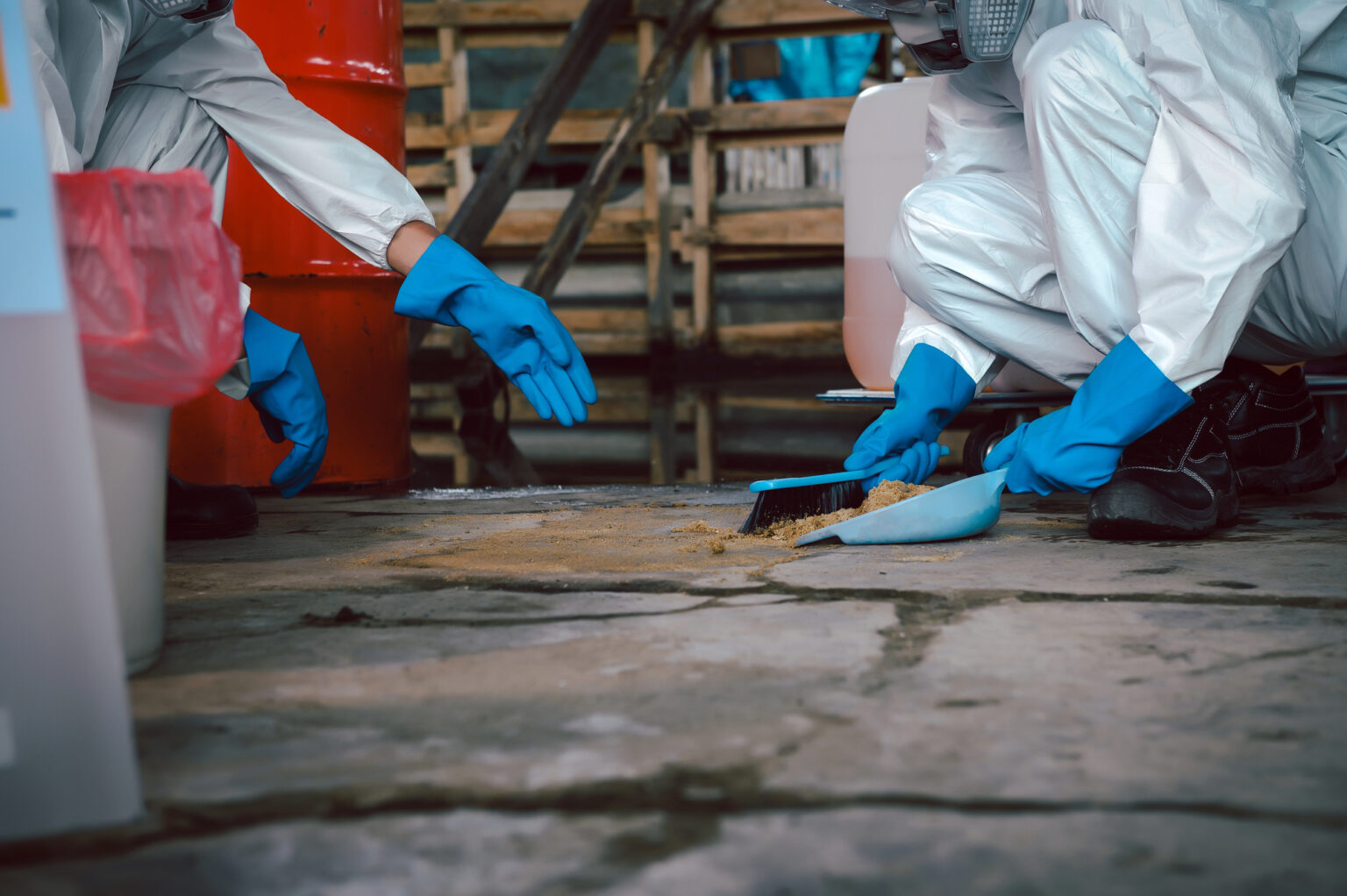
Cleaning Product Spills: Accidental spills involving cleaning chemicals require additional attention. Staff should follow the product label and safety data sheet instructions and use appropriate protective equipment.
Dirt and Mud: Rainwater and mud often enter commercial buildings through entrances. Regular spot cleaning and floor maintenance help prevent dirt from spreading into hallways and office spaces.
Spills involving unknown, hazardous, or potentially dangerous substances should be handled according to the facility’s emergency and safety procedures rather than treated as routine cleaning tasks.
How Janitorial Services Respond to Routine Spills
Professional janitorial teams generally follow a systematic process when responding to everyday commercial spills. The exact procedure may vary depending on the type of spill and the surface involved.
1. Inspecting the Affected Area
The first step is identifying the location, size, and nature of the spill. Cleaners assess whether the affected area contains water, beverages, food, or another substance that requires a specific cleaning method.
They also consider nearby foot traffic and whether the spill could spread to other areas.
2. Securing the Area
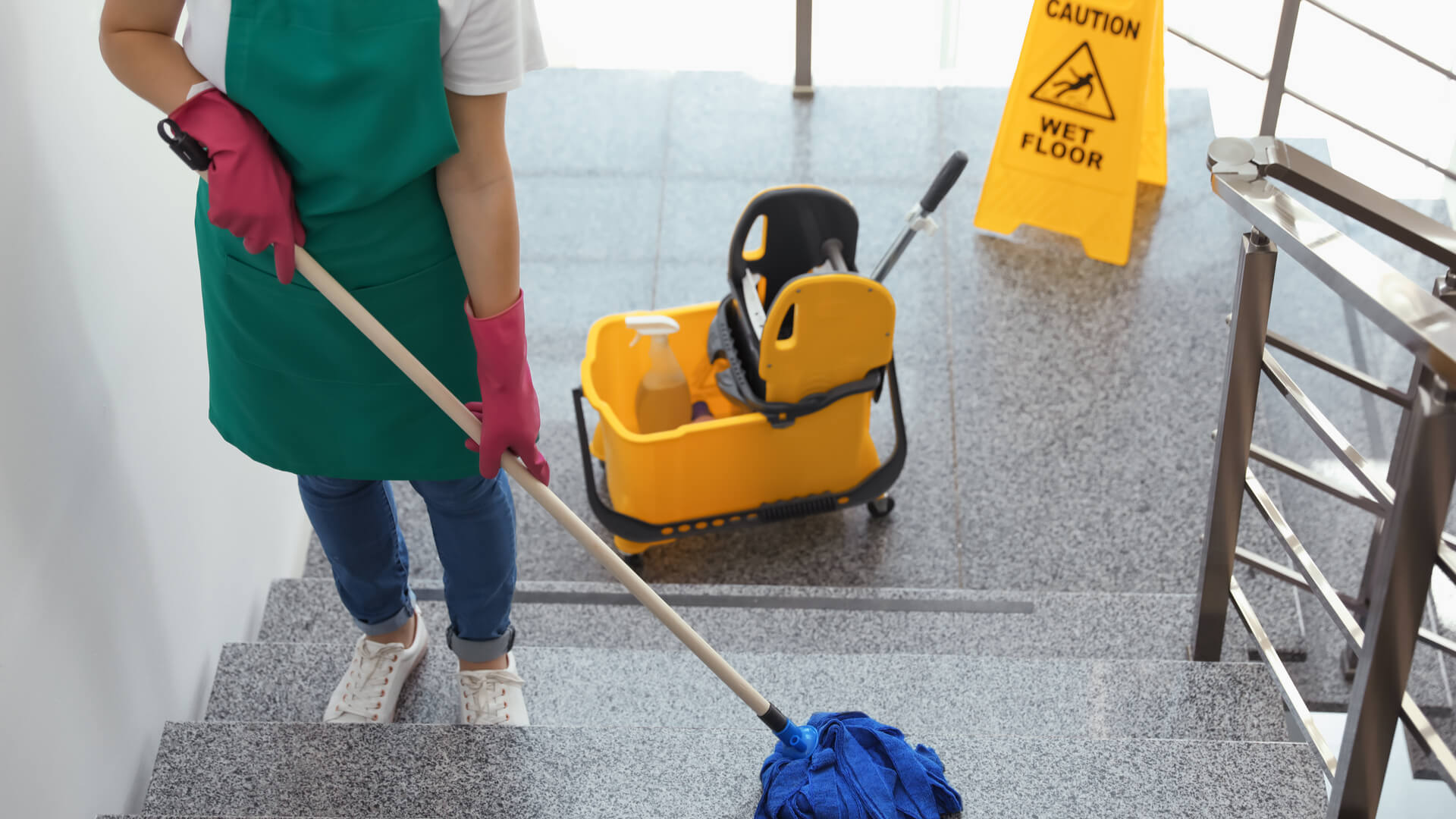
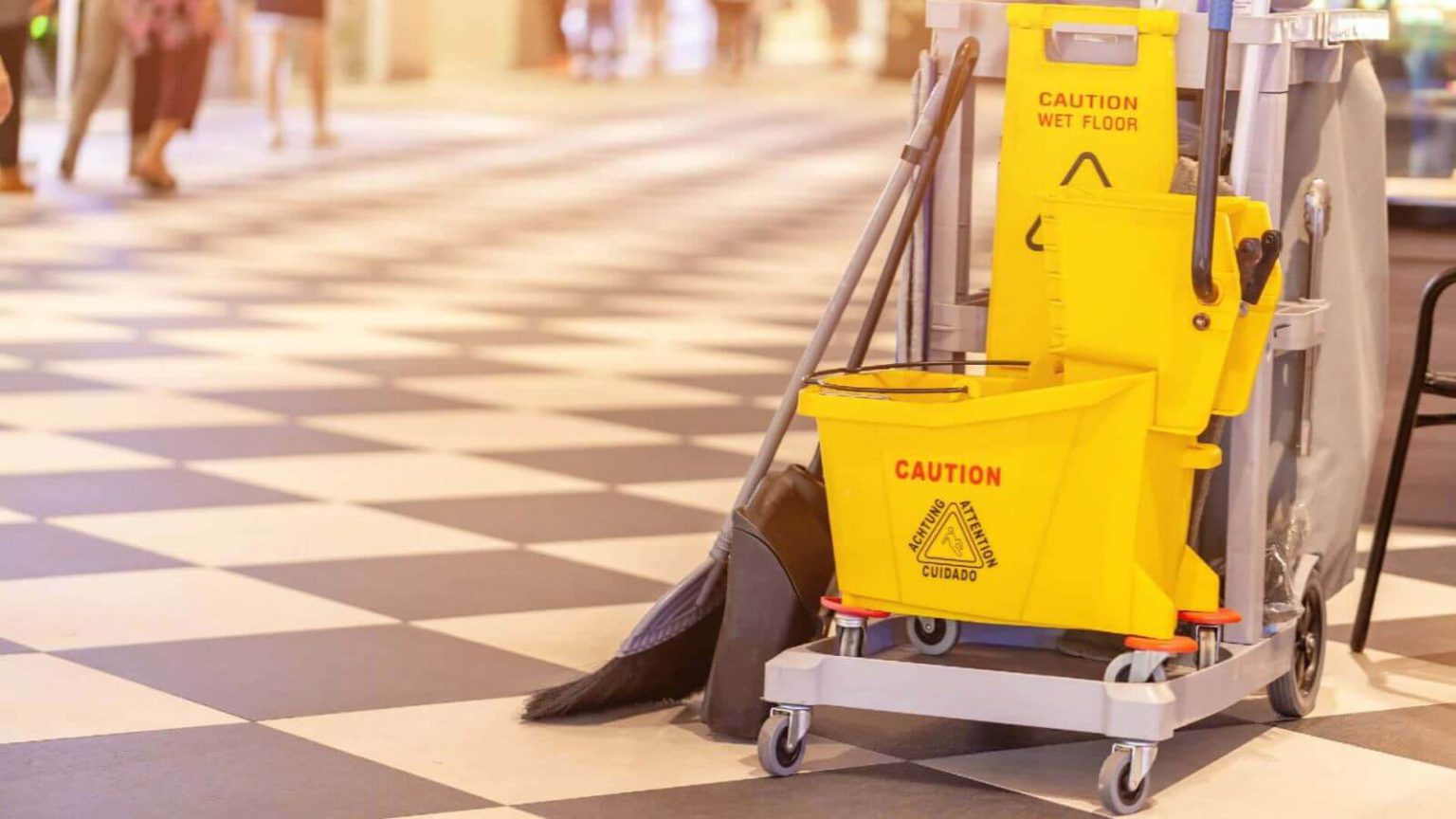
When a spill creates a slipping risk, the affected area should be marked or temporarily restricted. Wet floor signs, barriers, or other warning measures can help prevent employees and visitors from walking across the affected surface.
Keeping people away from the area until it is safe is an important part of responsible spill management.
3. Removing the Spilled Material
The cleaning team uses suitable tools and materials to remove the spilled substance. Depending on the situation, this may involve absorbent materials, microfiber cloths, mops, or other cleaning equipment.
Removing the bulk of the spill before applying cleaning products helps make the remaining cleaning process more effective.
4. Cleaning the Surface
After removing the spilled material, cleaners use an appropriate cleaning solution based on the surface type and substance involved.
The correct product and dilution help remove remaining dirt, residue, and sticky deposits without unnecessarily damaging the flooring or surrounding surfaces.
5. Drying and Inspecting the Area
The final step involves removing excess moisture and checking the cleaned surface. The area should be left in a condition that is safe for normal use.
Warning signs should remain in place until the floor is sufficiently dry and safe to reopen.
Choosing the Right Cleaning Products and Equipment
Different commercial flooring materials respond differently to cleaning products and moisture. Using an unsuitable product may cause discoloration, surface damage, or residue buildup.
Janitorial professionals select cleaning products and equipment according to the affected surface and the type of spill.
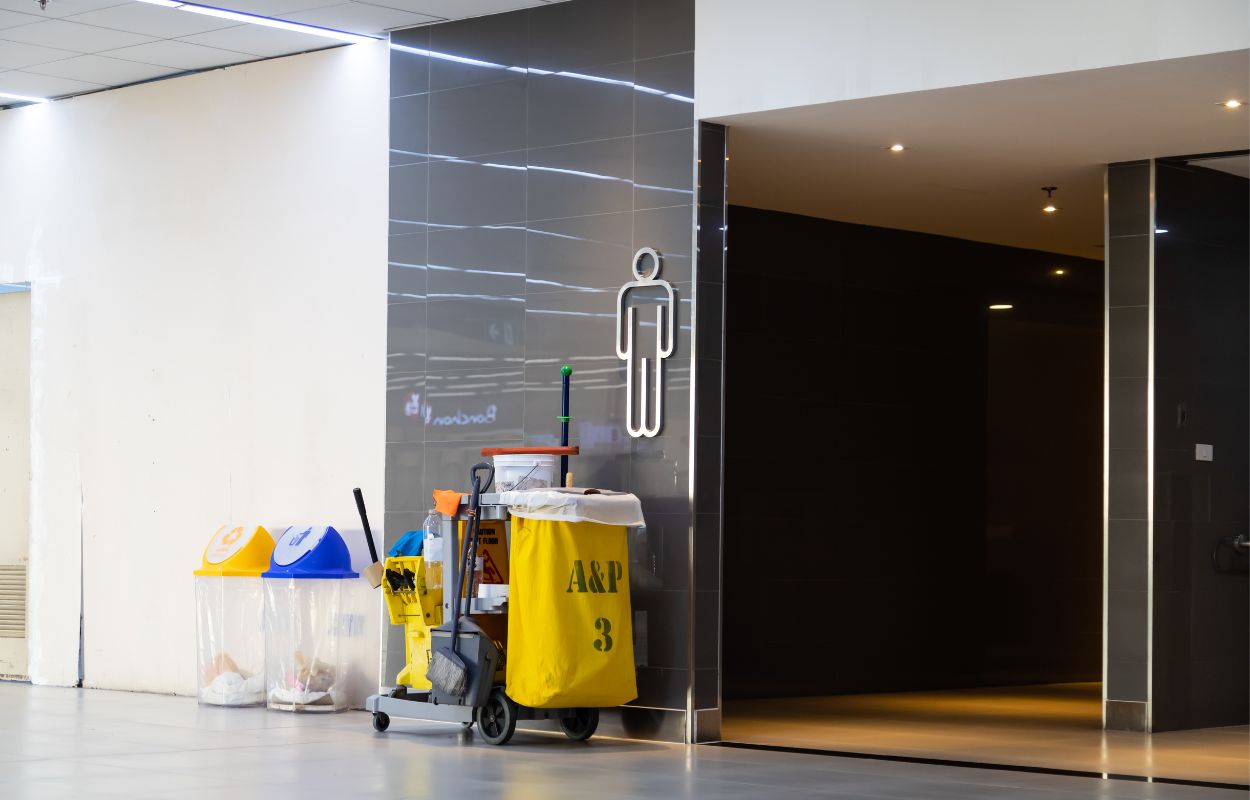
Common spill-cleaning supplies include microfiber cloths, absorbent materials, mop systems, buckets, suitable floor cleaners, and wet-floor warning signs.
For carpeted areas, cleaners may use appropriate spot-cleaning products and techniques to remove spills without unnecessarily soaking the carpet.
Following manufacturer recommendations is important when selecting cleaning solutions for tile, vinyl, laminate, carpet, and other commercial flooring materials.
Managing Spills in High-Traffic Commercial Areas
Some areas of commercial properties experience more frequent spills because of daily activity. These locations may need more frequent inspections and faster cleaning responses.
Office Break Rooms and Kitchens
Break rooms are common locations for coffee, water, food, and beverage spills. Regular surface cleaning, floor maintenance, and trash removal help keep these shared areas presentable.
Reception Areas and Building Entrances
Rainwater, mud, and moisture can enter commercial buildings through doorways. Entrance mats, routine floor inspections, and prompt spot cleaning help prevent these materials from spreading throughout the facility.
Hallways and Corridors
Hallways connect different sections of a commercial property and often experience continuous foot traffic. Even a small spill can create an inconvenience or safety concern if it is ignored.
Restrooms
Water around sinks, countertops, and restroom floors requires regular attention. Janitorial staff can include these areas in routine inspections and cleaning schedules.
Conference and Meeting Rooms
Coffee, refreshments, and food served during meetings can leave stains and residue on tables, floors, and other surfaces. Prompt cleaning helps prepare these rooms for their next use.
Preventing Slip Hazards During Spill Cleanup
Safety is a major consideration when handling commercial spills. Wet floors can create slipping risks, particularly near entrances, restrooms, kitchens, and frequently used walkways.
Janitorial staff should follow established safety procedures, including:
- Placing wet floor signs around affected areas.
- Restricting access when necessary.
- Wearing appropriate protective equipment.
- Using suitable cleaning products and tools.
- Removing excess moisture from floors.
- Confirming that the area is safe before reopening it.
Businesses should also establish a clear reporting process so employees can notify facility management or janitorial staff when spills occur.
How Routine Janitorial Maintenance Helps Reduce Spill Problems
Although spills cannot always be prevented, regular janitorial maintenance can help businesses manage them more effectively.
Scheduled floor cleaning removes everyday dirt and residue that can make surfaces harder to maintain. Routine inspections help identify moisture, stains, and debris before they become larger cleaning concerns.
A comprehensive janitorial program may combine regular mopping, vacuuming, restroom maintenance, break room cleaning, trash removal, and spot cleaning.
For busy commercial properties, daytime janitorial support can provide additional attention to spills that occur during operating hours.
Creating an Effective Commercial Spill Response Plan
Businesses benefit from having a clear procedure for reporting and managing routine spills. A well-organized plan helps employees understand whom to contact and how affected areas should be handled.
An effective spill response plan should identify responsible personnel, establish reporting procedures, provide access to appropriate cleaning supplies, and explain how to secure affected areas.
It should also distinguish between routine spills and hazardous incidents that require specialized response procedures.
Working with a commercial janitorial service provider can help businesses establish consistent cleaning responsibilities and maintain an organized approach to everyday spill management.
Why Businesses Should Include Spill Cleanup in Janitorial Services
Routine spill cleanup should be considered an important part of commercial facility maintenance rather than an occasional extra task.
Including spot cleaning and spill response in a janitorial service agreement helps businesses understand what support is available during regular operating hours.
It also allows facility managers to establish expectations for response times, cleaning responsibilities, equipment, and safety procedures.
A customized service plan can address the specific spill-related concerns of offices, business centers, retail spaces, and other commercial properties.
FAQ: Commercial Spill Cleanup and Janitorial Services
How do janitorial services clean routine commercial spills?
Janitorial teams typically inspect the spill, secure the affected area, remove the spilled material, clean the surface with an appropriate product, and ensure the area is dry and safe before reopening it.
Why should commercial spills be cleaned immediately?
Prompt cleanup helps reduce slipping risks, prevent stains and residue buildup, control unpleasant odors, and maintain a clean environment for employees and visitors.
What equipment is used for commercial spill cleanup?
Common equipment includes microfiber cloths, absorbent materials, mop systems, buckets, appropriate cleaning solutions, and wet-floor warning signs. The equipment depends on the spill and flooring type.
Do janitorial services handle spills during business hours?
Many commercial janitorial providers offer daytime cleaning or day porter services that can address routine spills during operating hours. Availability and response arrangements depend on the service agreement.
Can routine spill cleanup prevent floor damage?
Prompt cleanup can help prevent certain spills from leaving stains, sticky residue, or moisture-related damage. Using suitable cleaning products and following flooring manufacturer recommendations are also important.
Should businesses include spill cleanup in their janitorial contracts?
Yes. Businesses should clarify whether routine spot cleaning and spill response are included, which areas are covered, and whether additional charges apply to special or hazardous cleanup situations.
Final Thoughts
Routine commercial spills are unavoidable in busy workplaces, but proper cleaning procedures can help businesses manage them effectively. Prompt attention, suitable cleaning products, appropriate equipment, moisture control, and safety precautions all contribute to better spill management.
By including routine spill cleanup in a structured janitorial maintenance program, businesses can maintain cleaner floors, more presentable shared spaces, and safer environments for employees, customers, and visitors. A dependable commercial janitorial service can help keep everyday cleaning needs under control while supporting the overall maintenance of the facility.