How Janitorial Services Support Educational Facilities
Educational facilities need consistent cleaning to support daily learning, staff activities, and visitor needs. Schools, training centers, colleges, and other educational buildings contain classrooms, hallways, restrooms, offices, cafeterias, and shared spaces that can experience heavy daily use.
Professional janitorial services for educational facilities provide scheduled cleaning and routine maintenance designed around the building’s specific needs. A well-planned cleaning program can help schools and educational organizations maintain cleaner, more organized, and presentable environments.
What Do Janitorial Services Include for Educational Facilities?
The exact scope depends on the facility, but common services may include:
- Classroom cleaning
- Office cleaning
- Restroom cleaning and sanitation
- Sweeping, vacuuming, and mopping
- Hallway and common-area cleaning
- High-touch surface cleaning
- Cafeteria and break-area maintenance
- Trash and recycling removal
- Entrance and lobby cleaning
- Routine floor care
- Periodic detailed cleaning
The service agreement should clearly define which areas and tasks are included.
1. Classroom Cleaning
Classrooms are used throughout the school day and can quickly accumulate dust, debris, fingerprints, and waste.
Professional commercial janitorial services may include vacuuming, sweeping, mopping, dusting, surface cleaning, and waste removal in designated classroom areas.
Cleaning schedules can be adjusted based on classroom occupancy and usage.
2. Restroom Cleaning and Sanitation
Educational facility restrooms can experience substantial daily traffic.
Janitorial staff may clean toilets, sinks, mirrors, faucets, floors, partitions, and other designated surfaces. Waste removal and supply restocking can also be included when specified.
High-use restrooms may require more frequent service than lower-traffic areas.
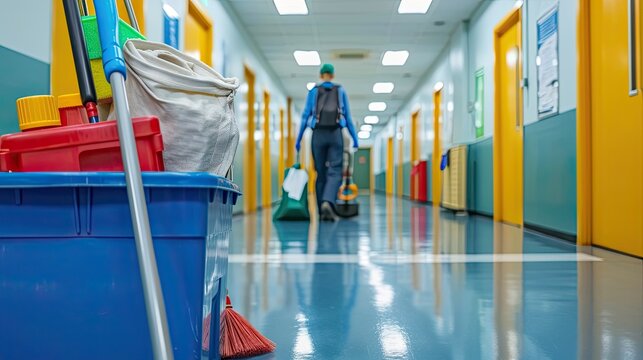
3. Hallway and Common-Area Maintenance
Hallways, stairways, waiting areas, and other shared spaces connect different parts of an educational facility.
These areas can collect dirt and debris throughout the day. Routine sweeping, vacuuming, mopping, and surface cleaning can help maintain them consistently.
4. High-Touch Surface Cleaning
Schools and educational facilities contain many frequently touched surfaces, such as:
- Door handles
- Handrails
- Light switches
- Faucet handles
- Push plates
- Shared surfaces
- Certain common-area equipment
A customized janitorial plan can identify priority areas based on usage.
Cleaning and disinfection are different processes. When disinfection is required, the facility should establish appropriate products and procedures based on applicable requirements and manufacturer instructions.
5. Floor Cleaning and Maintenance
Educational buildings can experience heavy foot traffic, especially near entrances, hallways, cafeterias, and classrooms.
Routine janitorial floor care may include:
- Sweeping
- Vacuuming
- Mopping
- Spot cleaning
- Debris removal
Flooring materials vary, so cleaning methods should be appropriate for each surface. Specialized floor services can be scheduled separately when required.
6. Cafeteria and Dining Area Cleaning
Cafeterias and dining spaces can experience food spills, crumbs, packaging waste, and heavy traffic.
Depending on the agreement, janitorial services may include cleaning designated tables, floors, surrounding surfaces, and waste containers.
Food-preparation equipment and specialized kitchen systems may require separate cleaning procedures or qualified providers.
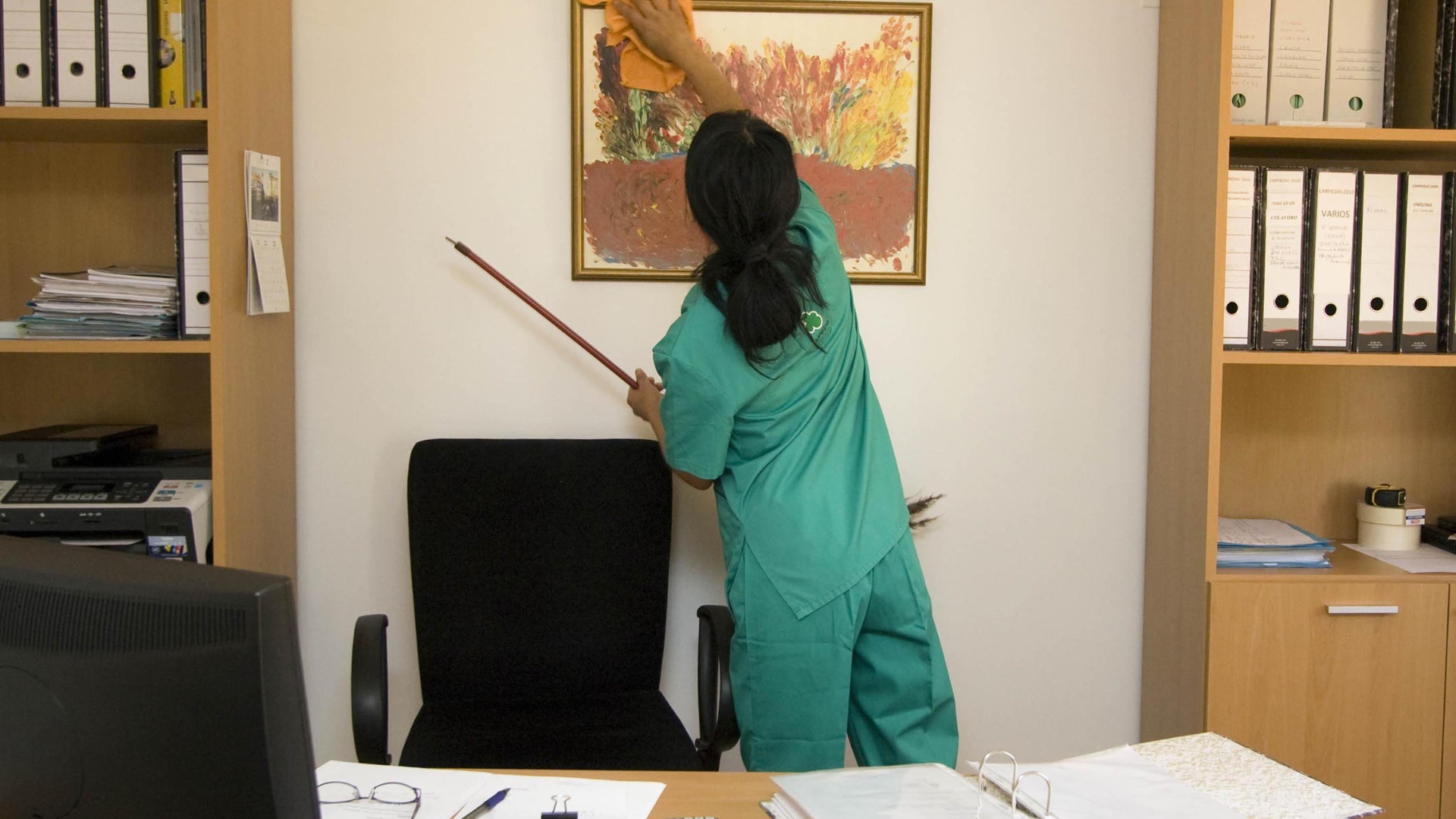
7. Office and Staff Area Cleaning
Educational facilities also contain administrative offices, staff rooms, conference areas, and other workspaces.
Routine cleaning may include dusting, vacuuming, floor cleaning, surface care, and waste removal in designated areas.
Maintaining these spaces can help support a professional working environment for faculty and administrative staff.
8. Trash and Recycling Removal
Schools generate waste from classrooms, offices, cafeterias, restrooms, and common areas.
Janitorial teams can empty designated trash and recycling containers, replace liners where appropriate, and move materials to approved collection points according to facility procedures.
Specialized or regulated waste should be handled according to applicable requirements and established facility protocols.
9. Entrance and Lobby Cleaning
Entrances receive traffic from students, teachers, staff, parents, visitors, and service personnel.
Routine cleaning can address dirt, dust, debris, fingerprints, and moisture around designated entrances and lobby areas.
A clean entrance can also contribute to a more professional appearance for visitors.
10. Cleaning Schedules for Schools
Educational facilities often operate according to fixed schedules, making cleaning coordination important.
Depending on the facility, cleaning can be performed:
- Before classes
- During selected daytime periods
- After school
- In the evening
- On weekends
- According to a customized schedule
After-hours cleaning can be useful when administrators want to minimize disruption during classes and activities.
11. Seasonal and Periodic Cleaning
In addition to routine janitorial service, educational facilities may require periodic detailed cleaning.
This may include:
- Carpet cleaning
- Detailed floor care
- Baseboard cleaning
- Interior glass cleaning
- High and low surface cleaning
- Detailed common-area cleaning
The frequency should be determined by facility usage and maintenance requirements.
12. Quality Control
A professional educational facility cleaning company should have procedures for monitoring service quality.
Quality-control practices may include:
- Cleaning checklists
- Supervisor inspections
- Routine audits
- Service reports
- Customer feedback
- Corrective cleaning procedures
These systems can help ensure that scheduled tasks are completed consistently.
Benefits of Professional Janitorial Services for Educational Facilities
A structured cleaning program can help educational organizations:
- Maintain cleaner classrooms
- Support restroom maintenance
- Keep hallways and common areas presentable
- Manage daily waste
- Maintain floors
- Reduce routine cleaning responsibilities for staff
- Support consistent facility maintenance
- Create a more organized environment
Janitorial services are one part of a broader facility-management and health-and-safety program.
Frequently Asked Questions
Why are janitorial services important for schools?
Janitorial services help educational facilities maintain classrooms, restrooms, hallways, offices, floors, entrances, and other designated areas through consistent cleaning and routine maintenance.
How often should an educational facility be cleaned?
Cleaning frequency depends on building size, student and staff population, foot traffic, operating hours, and specific facility requirements. High-use areas generally require more frequent cleaning.
Can school cleaning schedules be customized?
Yes. Professional commercial janitorial services can be scheduled around class times, activities, operating hours, building access, and cleaning priorities.
Should educational facilities use after-hours cleaning?
After-hours cleaning can reduce disruption during classes and daily activities. However, daytime service may also be appropriate for certain areas and facilities.
Choosing a Janitorial Company for an Educational Facility
When selecting a janitorial services provider, educational organizations should evaluate experience, staff training, cleaning procedures, scheduling flexibility, quality control, insurance, communication, and service scope.
A detailed proposal should identify the areas covered, cleaning frequency, responsibilities, supplies, equipment, and procedures for addressing service concerns.
Supporting Cleaner Educational Environments
Professional janitorial services support educational facilities by maintaining classrooms, restrooms, hallways, offices, floors, entrances, dining areas, and other shared spaces.
A customized cleaning plan based on facility usage, operating schedules, and cleaning priorities can help educational organizations maintain consistent facility cleanliness while allowing teachers, administrators, and staff to focus on education and daily operations.